Real estate virtual assistant (part-time, remote)
We're a [solo agent / small team] in [market] looking for a virtual assistant for [number] hours a week.
You'll keep our contact database current after calls and showings, book showings and inspections, send listing alerts and follow-up messages we've approved, and keep the calendar clean.
You have experience supporting a real estate agent or team, write clear and friendly messages, and are comfortable working in [your CRM and calendar]. Hours overlap with [time zone] business hours.
A real estate virtual assistant that remembers the details and keeps your business moving.
Meet The Librarian, your virtual assistant for real estate. Capture client information by voice or text, keep conversations organized, and prepare personalized follow-ups without having to sit down at your computer.
Stay focused on your clients while The Librarian helps you keep track of the relationships, commitments, and next steps that move deals forward.
No credit card required. 30 days free, then USD 49.99/month.
What does a real estate virtual assistant do?
A real estate virtual assistant is a remote assistant, usually paid by the hour or by the month, who handles the administrative work around an agent's business: inbox and calendar, database updates, listing paperwork, marketing tasks and lead follow-up. Most of the help agents want from a virtual assistant for realtors isn't glamorous. It's the small, persistent work of keeping relationships warm:
Follow-up.
The buyer who seemed ready three weeks ago and hasn't heard from you since. The showing where the sellers said they'd decide by Friday. If you want a fuller picture of how The Librarian handles this, see our page on follow-up reminders for real estate agents.
Client notes.
The couple who wants a north-facing yard for their garden. The one who flinched at the mention of a fixer: details that matter in month three, if anyone can still find them. We write more about voice notes for real estate agents elsewhere.
Scheduling.
Coordinating showings, callbacks, and inspection appointments without letting one drop.
Keeping the database current.
A contact record that still says "asked about condos in March" stops being useful in May.
Real estate virtual assistant tasks
The work agents most often hand to a VA falls into five groups. Few assistants do all of it; it helps to decide which group matters most before you hire.
Admin and database
- Keep contact records up to date after calls and showings
- Enter new leads from portals, sign-in sheets and referrals
- Clean up duplicates and old contacts
- Manage the inbox: sort, flag, draft routine replies
Calendar and coordination
- Book showings, inspections and appraisals
- Confirm appointments with clients and other agents
- Send reminders before closings and key dates
Lead follow-up
- Make first contact with new online leads by text, email or phone
- Keep long-term leads on a follow-up schedule
- Send listings that match what a buyer asked for
Scripts and templates for this are in real estate follow-up templates.
Listing and marketing (a real estate marketing virtual assistant)
- Prepare listing descriptions and enter listing details for the agent to check
- Schedule social posts and build simple graphics
- Put together newsletters and just-listed or just-sold emails
Transaction support
- Track contract dates and deadlines
- Collect documents and signatures
- Keep clients updated on where the deal stands
Transaction coordination is often a separate, specialist role, priced per file rather than per hour.
Trusted by agents
Used by agents at these brokerages







Real estate virtual assistant cost and rates
What a VA costs depends mostly on where they're based, how many hours you buy, and whether an agency manages them. Here is what published pricing looked like when we checked in November 2026:
| Type of help | How it's usually priced | Published range |
|---|---|---|
| Offshore VA through an agency (most often in the Philippines) | Hourly, in monthly blocks | About USD 7 to 13 an hour |
| US-based VA through an agency | Hourly blocks or monthly plans | From about USD 23 an hour at a budget agency to about USD 65 an hour at a premium one |
| Managed part-time or full-time VA | Flat monthly fee | About USD 1,250 to 2,000 a month and up |
| Transaction or listing coordinator | Per file | At one provider: listing coordination from about USD 127, transaction coordination from about USD 339 per file |
| In-house administrative assistant (for comparison) | Salary | Median USD 23.23 an hour (US, May 2025) |
Agencies also charge setup or onboarding fees, and buying more hours usually lowers the hourly rate. The in-house figure is the US median for secretaries and administrative assistants, before benefits and payroll costs.
Sources: published pricing from TaskBullet, MyOutDesk and Boldly, and The Close's 2026 review of real estate virtual assistant companies; in-house pay from the US Bureau of Labor Statistics.
The Librarian is a flat USD 49.99 a month after a 30-day free trial; see the pricing page. It covers a narrower job than a VA, which the next section is honest about.
Real estate virtual assistant services vs an AI assistant
If you're weighing real estate virtual assistant services against an AI assistant, the honest answer is that they're good at different things. A person brings judgment, a voice on the phone and the ability to deal with other people on your behalf. Software is there at 10pm after a showing, doesn't need briefing, and keeps what you told it on the client's record.
| Job | A virtual assistant | The Librarian |
|---|---|---|
| Remembering what each client said | What you or they record, including calls they join | What you say or type after a call or showing, kept on that client |
| Knowing who needs you today | Yes, from the follow-up list they keep for you | A "who needs you today" list each day |
| Drafting follow-up texts and emails | Yes, once briefed | Yes, in your style, from what you said |
| Phone calls, cold calling | Yes | No |
| Booking showings with other agents | Yes | No; appointments you set go on your calendar |
| Transaction paperwork and deadlines | Yes, or a transaction coordinator | No |
| Social posts, graphics, newsletters | Yes | Yes: drafts social posts and graphics, and can make newsletters |
| Typical cost | See the table above | USD 49.99 a month |
So the best virtual assistant for real estate depends on the job. If what you need is someone to make calls, run paperwork or deal with other agents and vendors on your behalf, hire a person. If the problem is that details and follow-ups slip, The Librarian covers that part, and it works alongside a VA if you have one.
For a wider look at AI tools by job, see AI for real estate agents.
Plenty of agents use both.
The Librarian handles the memory and follow-up work: listening to your voice notes, keeping your notes on each client current, surfacing who needs a call, and drafting the message for you to review, send, or have sent. Showings and appointments go on your Google or Outlook calendar, your Google Contacts stay current, and your CRM stays your system of record.
Two jobs still need a person, whether that's a real estate executive assistant or a personal assistant billed by the hour:
- Transaction paperwork. Contracts, disclosures and compliance review need a person's judgment and signature.
- Cold calling. Cold calling needs a voice on the line, and that's a person's job.
The Librarian keeps track of what was said and what was promised; a person still handles the work that requires a voice on the line or a hand on a contract.
How to hire a real estate virtual assistant
- Write down what you'd hand off. For two weeks, note every task that took you away from clients. That list is the job, and it tells you whether you need a few hours a week or a full-time person.
- Choose agency or direct. Real estate virtual assistant companies recruit, train and replace assistants for you, and charge more for it. Hiring directly through a freelance marketplace costs less and puts the vetting on you.
- Look for real estate experience. An assistant who already knows how showings, listing paperwork and portal leads work needs far less training.
- Give a paid test task. Something real and small: clean up twenty contacts, or draft follow-ups for last weekend's open house.
- Set up access carefully. Give the assistant their own logins where your tools allow it, and check your brokerage's and MLS's rules before sharing any account.
- Start narrow. One group of tasks for the first month, then add more once the handoffs work.
A short real estate virtual assistant job description
How it works
-
1
Say what happened.
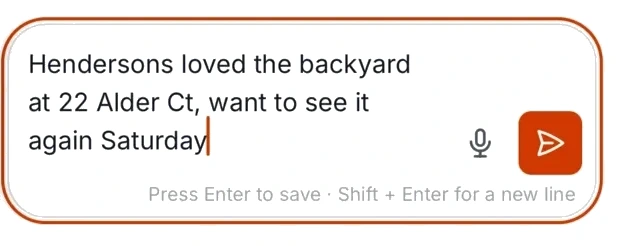
You leave a voice note after the showing: "Showed the Hendersons 418 Laurel Street. They want something with a bigger yard. Follow up Thursday."
Adding a note on the Hendersons' record: type it, or tap the mic and say it.
-
2
The Librarian remembers it against the right client.
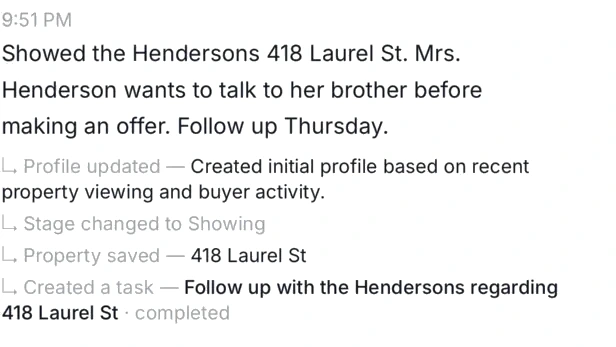
It attaches the note to the Hendersons, not to a general notepad you'll never search.
The first note on the Hendersons' record, with what The Librarian did with it: profile updated, stage changed, property saved, follow-up task created (closed out after the next showing).
-
3
You get reminded, and the follow-up is drafted.
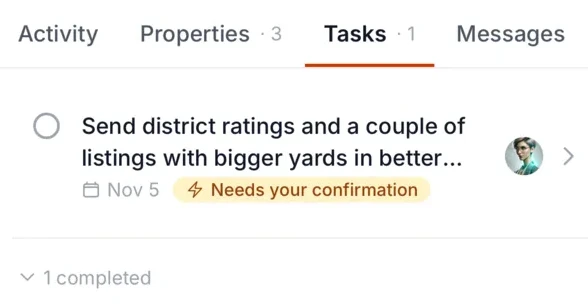
Thursday arrives, and the Hendersons come up with a draft in your style.
The Hendersons' follow-up, due Nov 5, waiting for your confirmation.
Working with a VA and The Librarian
If you have an assistant or work with an agency, they see the same memory you do. A virtual assistant for real estate agents and The Librarian do different jobs, and work well together. Your voice note about the bigger yard is in the record, so your assistant doesn't need to be briefed on what the Hendersons wanted. They can pick it up from the same notes you made. That tends to cut down on the "wait, what did they say?" messages between you.
If you don't have a VA, The Librarian covers the memory and follow-up part on its own: what each client said, who needs you today, and a drafted message ready for you to review. When you're ready to hire for the rest, your assistant starts with the notes you've already made.
Works alongside your tools
The Librarian sits on top of the tools you already use rather than asking you to move anything, and it works with BoldTrail CRM (beta sync), Gmail, Outlook, Google Calendar, Outlook Calendar, Google Contacts, WhatsApp and SMS. If you want the details on the CRM side specifically, we have a page on how it works with your CRM.
FAQ
Is The Librarian a person?
No. It's software: a memory and follow-up assistant you talk to. Transaction judgment stays with you.
Does it call or text my leads for me?
It drafts your follow-up texts, emails and WhatsApp messages in your own style, and it can send them for you. By default, you approve each message before it goes out. Anything requiring a voice on the phone is still yours.
Does it work with my CRM?
It works alongside your CRM: tell it how a conversation went and it prepares a summary ready to add to your CRM, which stays your system of record. See more on the CRM page.
Can my assistant or VA use it too?
Yes. Your assistant, VA or teammates can see the same client memory you do, so they don't need a separate briefing on what was said in your showings and calls.
Is client data private?
Client details are not used to train models, and SOC 2 certification is in progress. You can ask us about specifics before you commit.
What tasks should I give a real estate VA first?
Start with the work that pulls you away from clients most often: updating the contact database after calls and showings, the inbox and calendar, booking showings, and lead follow-up. Listing and marketing materials and transaction deadlines can come later, or go to a specialist.
How much does a real estate virtual assistant cost?
Published agency pricing we checked in November 2026 ran from about USD 7 to 13 an hour for offshore assistants, from about USD 23 an hour at a budget US-based agency to about USD 65 an hour at a premium one, and about USD 1,250 to 2,000 a month and up for managed part- or full-time plans. The cost section above lists the sources.
Can an AI assistant do what a real estate VA does?
Part of it. An AI assistant like The Librarian keeps what each client said, shows you who to follow up with and drafts the message. It also drafts social posts and graphics, and can make newsletters. It doesn't make phone calls, coordinate with other agents or handle transaction paperwork; those still need a person.
Should I hire a VA through an agency or on my own?
An agency costs more but recruits, trains and replaces the assistant for you. Hiring on your own costs less and leaves the vetting and training to you. If it's your first VA, an agency's support can be worth the difference.
The Librarian costs USD 49.99 a month after the 30-day free trial, and you can see everything on the pricing page. If follow-up is what you're trying to fix first, start with follow-up reminders; if it's the notes, start with voice notes.
No credit card required. 30 days free, then USD 49.99/month.